How to Build a Personal Brand Through Livestreaming
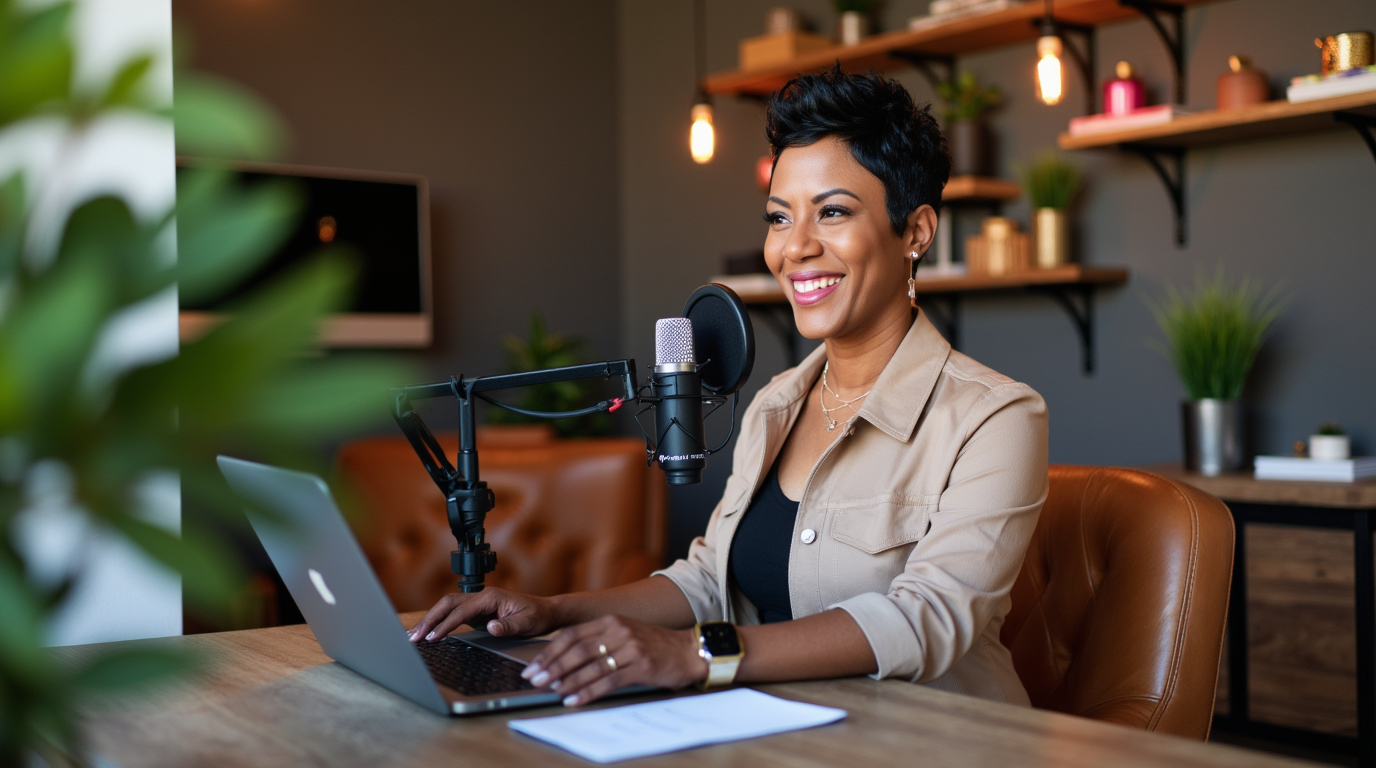
A personal brand is not built in one viral moment. It is built in what you repeatedly show on camera, week after week, until your audience knows exactly what to expect from you.
That is the part most people miss. They chase the breakthrough post, the algorithm hack, the perfect launch. Meanwhile, the coaches and consultants who actually become known in their field are doing something much simpler. They are showing up on a predictable schedule, with a clear point of view, and letting consistency do the work that hype never could.
Livestreaming is the fastest way to build that kind of recognition. Not because it reaches the most people, but because it teaches your audience who you are at a depth that pre-produced content cannot match. This guide walks through how to use it well. How to claim your position, build the assets that read clearly on camera, and turn a single weekly broadcast into the foundation of a personal brand that brings clients to your door.
Why livestreaming builds a personal brand faster than any other format
Recognition comes from repetition. Your audience needs to see you in the same place, at the same time, talking about the same things, often enough that you become the person they associate with that topic. Livestreaming creates that pattern faster than any other format because it gives them something pre-produced video cannot. Real time, unedited access to how you think.
When viewers watch you work through a question on camera, they are not just learning from you. They are deciding whether they trust you. That decision happens faster in a live environment than in any blog post or carousel, and it is the foundation every personal brand needs before the offers start to convert.
This is why a coach with 200 weekly viewers and a clear point of view will outperform a coach with 20,000 followers and no signature angle. Recognition is not about reach. It is about clarity.
Step 1: Claim one position and write a one-sentence brand statement
Before you go live, you need to know exactly who you help, what outcome you create, and how you do it. Most coaches skip this step or rush through it, then wonder why their content feels generic.
Use this template: "I help [audience] get [result] by [method]."
Keep it short. Keep it specific. If you cannot say it in one breath, it is not ready yet.
Pair that statement with two signature stories. Real client situations you can tell on camera without notes, that prove the claim in concrete terms. These two stories will do more work for your brand than any tagline because they show your method in action instead of just describing it.
Step 2: Audit what your audience already sees
Search your name. Look at your existing platforms. Read the first three impressions someone would form if they found you online today. Then ask one question. Do those impressions match the position you just claimed?
If the answer is no, that gap is your starting point. You are not building a personal brand from scratch. You are bringing what already exists into alignment with where you want to be seen.
Pick two channels to focus on. For most coaches and consultants, that means YouTube as the home for your weekly livestream and one supporting channel where your audience already spends time. Align your visuals, your tone, and your posting rhythm across both. Resist the urge to be everywhere. Momentum beats reach for the first 90 days.
Step 3: Choose a framework and stick with it
A personal brand needs a structure your audience can follow. Pick one framework and use it consistently for at least six months. The specific model matters less than the discipline of using it long enough to see real results.
Three frameworks worth considering:
The Four C's works well for coaches who need a clear, repeatable format for every episode. Clarity. Connection. Conversation. Conversion.
The Seven Pillars helps experienced consultants connect their work to the deeper themes of their expertise.
The Brand Journey focuses on moving viewers from awareness to action through a sequenced content path.
Choose the one that answers the clearest gap in your current presence. Then commit. Switching frameworks every month is the fastest way to confuse your audience and stall your growth.
Step 4: Build the assets that make your livestream read clearly
A live show needs a small set of camera-ready assets that signal authority without taking weeks to produce.
You need a branded overlay with your name, role, and one credential. A standard intro and outro that take less than 20 seconds each. A consistent thumbnail layout for your replays. A pinned comment template with your call to action. And a simple wardrobe choice you can default to so you stop wasting energy on what to wear before every show.
These are not vanity items. They are the visual signals that turn a casual broadcast into a recognizable brand. Build them once, then use them every week.
Step 5: Design a monthly routine you can sustain
Burnout kills more personal brands than competition does. The fix is a routine compact enough to maintain and clear enough to measure.
Define your purpose and the two strengths that prove it. Pick one audience and one primary channel for a 90 day commitment. Create three story-driven episodes per month that show tangible client results instead of abstract claims. Measure two signals each week. Meaningful engagement, and direct responses to your offers or questions. Adjust monthly. Repeat what works. Stop what drains you without return.
This is the rhythm that builds a personal brand without consuming your calendar. One pillar livestream per week. A small set of repurposed clips. A short feedback loop. That is enough to compound recognition over 90 days, and more than enough to build a brand that does not depend on a viral moment to keep growing.
A 30 day launch plan
Week 1: Clarify and audit. Write your one-sentence brand statement. Capture your two signature stories. Audit your existing presence. Identify the three impressions you want to change or reinforce.
Week 2: Build the assets. Create your overlay, intro, outro, and thumbnail template. Choose your two primary channels. Decide your weekly broadcast day and time.
Week 3: Run your first show. Block 30 minutes on your calendar and go live for 10. Use a simple three part structure. Quick intro, one useful takeaway, clear CTA. Publish the replay as a clip within 24 hours.
Week 4: Measure and refine. Track your two signals. Adjust one element for next week. Schedule the next four episodes. You now have a working system.
Your next step
Personal brands are not built by posting more. They are built by showing up in the same place, with the same voice, often enough that your audience cannot forget you.
Block 30 minutes on your calendar this week and go live for 10. Use the three part structure. Save the replay as a clip. Then do it again next week. That is how a personal brand actually gets built. Not in the launch, but in the rhythm.

How to Get Coaching Clients From Live Video Sessions

 Apple Podcasts
 Spotify
 YouTube
 iHeartRadio
 Podchaser
 Overcast
 PocketCasts